The Shining

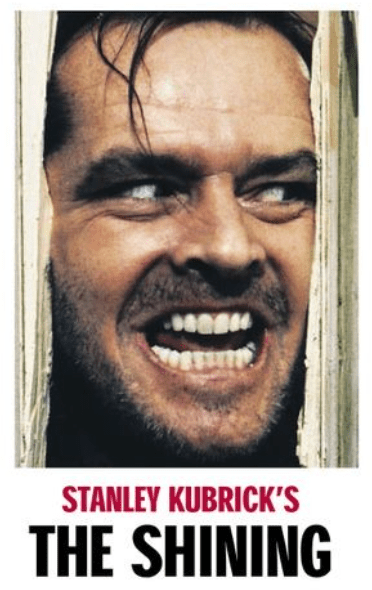
Stanley Kubrick’s The Shining is by far one of my favorite monster movies. It takes mental manifestations or monsters and makes them physical. Not only in the sense that previously murdered people are now visible and homicidal, but that mental instabilities are now being projected physically.

A loving father has become homicidal and is trying to kill his family. Something that the haunted Overlook Hotel drove him to do.

It plays on the good and the bad of people. A good man loves his wife and child and does not injur his family because they talk to much or because they want to explore (which is natural for a child).

This play brings out the Hyde in Jack Torrance and suddenly his Jekyll is nowhere to be found. And the people he once loved are now the people he despises. Its horrifying because they are essentially trapped together due to the snow and the paranormal occurrences don’t help either.
Great Expectations – An Acceptable Ending?

I personally prefer the original ending written by Dickens. I feel as if it give Pip closure to move on with his life. Now he is no longer living with a, “what if” option for Estella. The childhood love he felt has been put to rest and he can finally truly move on. Pip deserves to be happy.

The ending in the movie, however, leaves so much room for interpretations. Estella could remain a toxic figure in his life. She could be leading him on, while she’s married, so Pip will never leave a happy life. He’ll always won’t Estella and she will continue to let him want that.

I personally don’t feel like Estella deserves Pips loves. He fell in love with her when they were children and who she became was not a person who could give Pip happiness. She would never give him a pure love. Estella will forever be tainted by Miss Havisham’s teachings. I am happy that they did not marry and I prefer the original endings that Dickens wrote, where Pip gains closure and can move on with his life.

Crime and Punishment

Surprising to me what that common law did not have a definitive set of written law. Rather English common law referred back to previous judgments passes on similar crimes. It relied on the decisions made by previous judges, which could have been biased. (Today most things that occurred in the Victorian ages held some type of bias.) Another shocker was that trials only lasted 2 days. That seems like an awfully short amount of time to compile and present evidence. But trials today can be drug out for months and i don’t find that to be any more efficient.

Luckily, for me, the laws pertaining to women have changes drastically. For the Victorians women might as well have been another piece of property. Things did begin to improve for women in 1870, they could now keep £200 of their own earnings. And in 1884 they could own property and the rights to their own business. Yay women rights.

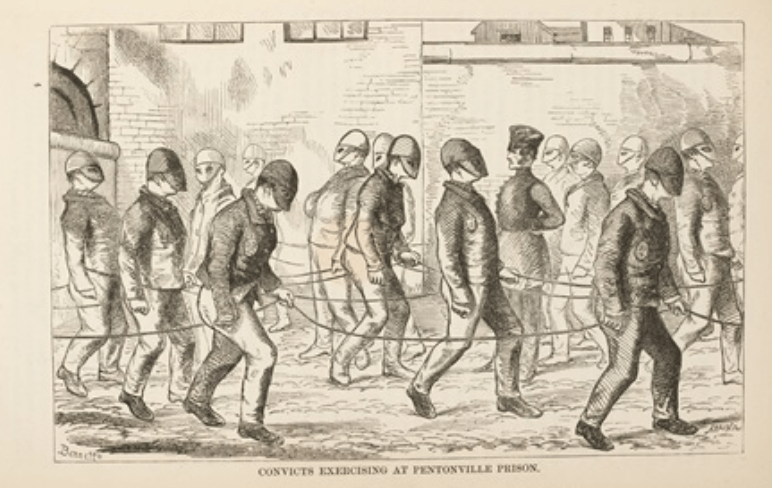
As for similarities between punishment then and now I can happily say that prison hulks no longer exist, we do not (that i know of) ship our murders to another country so they can prey on those poor people and our prisoners tend to have basic human rights. I was horrified to read that prisoners were devoid of all human contact and during brief outside contact were forced to wear a mask over their face to prevent speaking. Mental health was obviously not taken into consideration. However, today we still have the unsavory practice of grouping our mentally unstable patients or criminals in with people who are just just plain criminals.

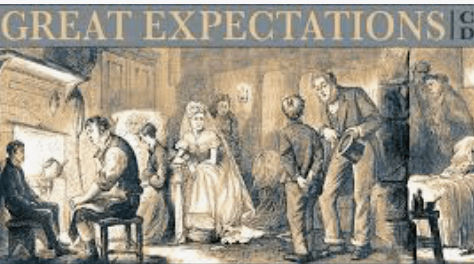
Great Expectations

The characters of Great Expectations are diverse and exciting. Pip begins as adorable and gullible but then morphs into a pompous gentleman; We don’t see Pips true character again until he experiences the loss of Abel Magwitch.

Estella, we discover, began as a sweet young girl but was ultimately molded into a weapon again men. What began as teachings to keep Estella from heartbreak resulted in a cold woman who was toxic.

Miss Havisham, our monster, is a product of personal tragedy. She was never able to get past what was done to her by her fake fiancé and stepbrother. I do pity her and she is most definitely broken. She is unable to move forward and will be stuck as she is until her death.

Mr. and Mrs. Joe Gargery are Pips caretakers. Mrs. Gargery is Pips older sister and she is cruel, she beats him (and her husband) frequently and does not look at Pip as anything but a burden.

Joe, however, is one of my favorite characters. He is slow of whit but pure of heart. Joe loves Pip and does everything he can to defend the boy. And ultimately in the end when Pip is ill and facing debtors prison it is Joe who saves him. It is Joe who will always love Pip no matter who he becomes.

Dickens and Pip

Charles Dickens had a rough childhood. He was the 2nd born of 8 children and his father had financial difficulties that landed him in debtors prison. Dickens worked alongside the working class in a factory that handled “blackening” or shoe polish.

Pip similar to Dickens grew up poor, at the mercy of his older sister and her husband the blacksmith because his parents and 5 siblings were deceased. Pip is set to apprentice as a blacksmith and that would have been his trade for the remainder of his life.

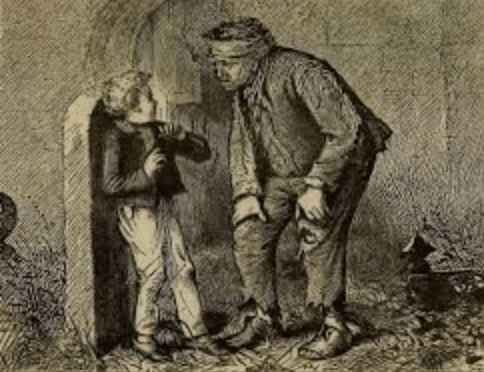
Dickens lived in a poor area of London called Camden Town, The frequently shown gibbet cage in Pips home town was most likely seen where Dickens lived as well. Prisoners were likely seen, and possibly even interacted with, in poorer areas, but I am unsure if any prison hulks were seen were Dickens grew up. It is possible that Dickens witnessed or even experienced an altercation with a prisoner that influenced his opening chapter of “Great Expectations.”

Victorian Transportation and Communication

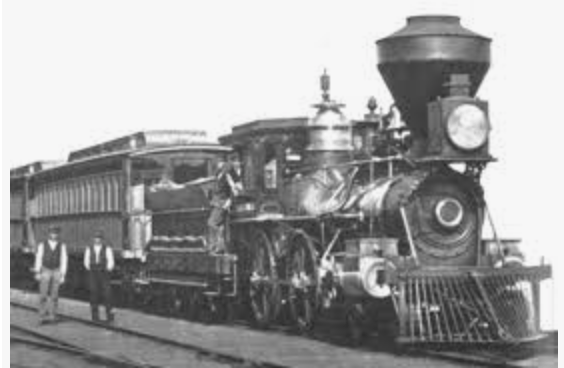
The railway system alone revolutionized Victorian transportation. Consider this a horse gallops, at maximum, 55mph. The express train could reach up to 80mph. The rail system extended throughout major cities such as Birmingham and Liverpool. This made the transport of food, news, medicine all much more feasible. Pleasure travel could now occur reasonably for the masses. It was like a whole new world opened up.

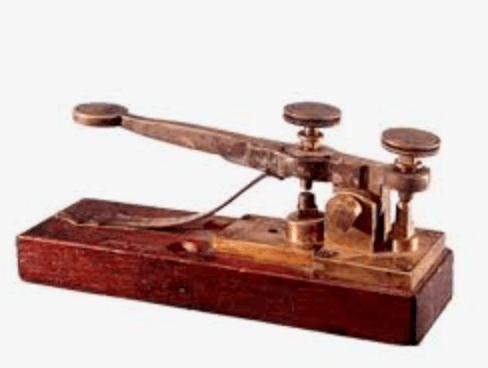
The electric telegraph was also a huge jump forward for communications. Instant communication compared to letter delivery, who would want to go back?

Now we look at the telegraph and it is archaic. People can now talk at their watch and it functions the same as a cell phone. We however would not be as technologically advanced as we are today without some of the innovations that came about during the Victorian Era.

Oh and while it was horrible and bad, we cannot forget British Imperialism and how that did in fact help the spread of information, technology and medicine.

Test #1

For our first test, I honestly was not sure what to expect. I am so used to fact driven tests, that you could use a scantron to complete that I had to sit for a moment and actually think on applying knowledge.

Despite my initial shock, I enjoyed the test. I liked that I had multiple options for which questions to answer. This way I was able to pick my favorite options to write on. I am thankful that i took descriptive notes as well. The time allotted definitely would not have been enough if i needed to look up information to use.

Overall, I enjoyed this “experiment” and I feel it was successful (I can’t speak for other students though) I would like to see the final set up in a similar manner.

Playing Favorites

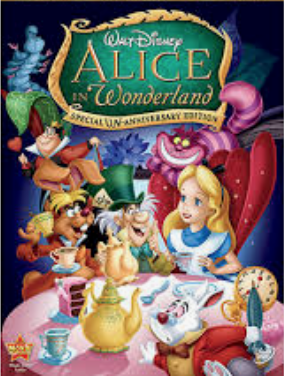
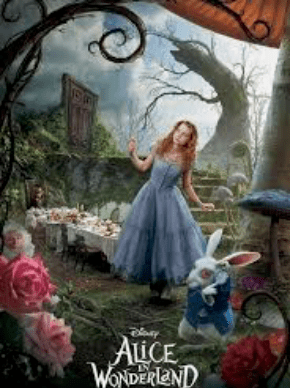
I would say that my favorite discussion so far has been Lewis Carroll’s “A Mad Tea Party.” I have always loved Alice in Wonderland. I remember watching the movie and reading the children’s story as a child. I believed it to be wonderful example of fantasy. A lovely whimsical tale meant to show children another world different from everyday life.

As a teenager I still loved the story but somehow I began to believe that these stories were a result of drug abuse. I honestly cannot recall where I heard or read this information but it made sense not me at the time. A normal mind does not think up the fantastical world that Alice lands in.

It was not until I took this class that I learned Lewis Carroll was autistic. Autism allows you to look at the world with a different perspective. He did not think like his peers and as such his writing reflected this. I also learned that while whimsical in nature, his stories hold political views. I honestly had no idea.

I am currently 29 years old and from childhood, to teenage years to adulthood “Alice in Wonderland” and Chapter VII, “A Mad Tea Party” have taken on completely different meanings for me. This story has followed me through life so far and whats shocking is the political message meant for the Victorians can still be applied today.

“Scandal in Bohemia”

To Sherlock Holmes she [Irene Adler] is always the woman. I have seldom heard him mention her under any other name. In his eyes she eclipses and predominates the whole of her sex.

Arthur Conan Doyle

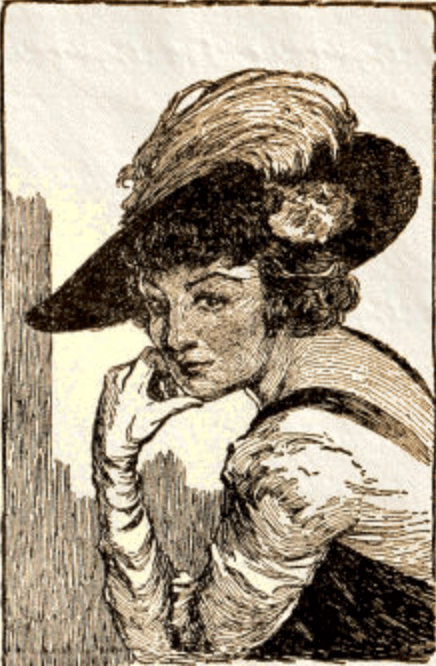
Irene Adler is featured in Arthur Conan Doyle’s “Scandal in Bohemia.” She is beautiful, smart and most importantly, the only woman to have outwitted Sherlock Holmes. She is referred to a THE woman, which places her above all others. While Holmes was most assuredly fascinated by her there was no love, no romance. Sherlock Holmes did not understand the concept of love. It did not fit with his outlook of the world. Love makes you stupid, and stupid is not a word that describes Sherlock Holmes.

Doyle also tells you at the very beginning of this story that there will be no future romance. Watson calls her “the late Irene Adler” which indicated she is deceased.

House vs Holmes

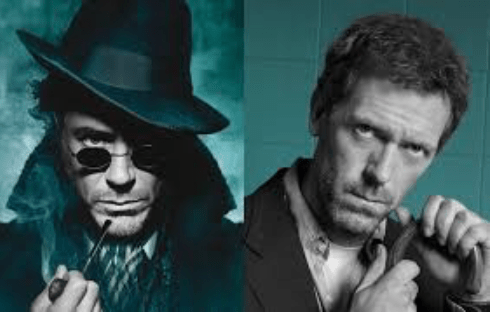
The TV show “House” stars a troubled but brilliant physician aptly named House. He similar to Holmes has an unmatched intelligence and seems to think and process information differently than others. Using unconventional means he figures out diseases and disorders, usually while his patients are lying to him.

The both also have a drug problem. Holmes uses cocaine to help his ADHD ridden mind to focus and House uses narcotics to focus through the pain of his injured leg.

When it comes to detective work Sherlock Holmes is a classic figure. I think that people expect an almost superhuman ability to piece together clues when they think of any detective work. Our media (TV shows and movies) tend to focus on a single individuals advanced mental capabilities to “save the day.” You’ll notice in these shows that everyone keeps having to come back to that one person in order to solve anything.

I believe that this expectation of haw detective work is done relates back to Arthur Conan Doyles stories about Sherlock Holmes. And funnily enough Doyle wrote these stories making fun of the average, everyday police force, who seemed incapable of solving any crimes.