“The Red Headed League”

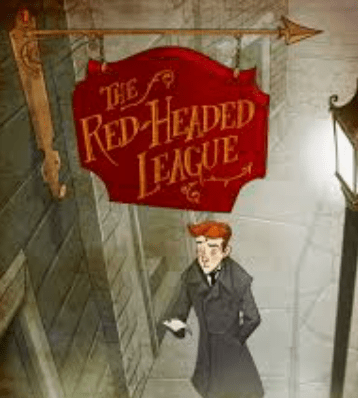
Sherlock Holmes’ intelligence in “The Red Headed League” is superhuman, computer-like even. He is able to, almost unnaturally, evaluate a situation and all of it’s components at a speed that leaves everyone else in the dust.

As for his physical involvement, when Holmes grabbed the riding crop to hit the wrist of a man holding a revolver. I believes this displays the fact that Holmes is so intelligent that he does not need to resort to using a weapon such as a gun to handle a situation. He does not need to shoot a person or get into a brawl to disarm someone.

Watson is an opposite to Holmes. He is the mentally scarred ex-soldier who, while not unintelligent, knows where his strengths lie. And he never goes anywhere without his revolver. Watson is the figure that grounds Holmes and links him to everyone else. I think that he helps bring balance to the scenario.
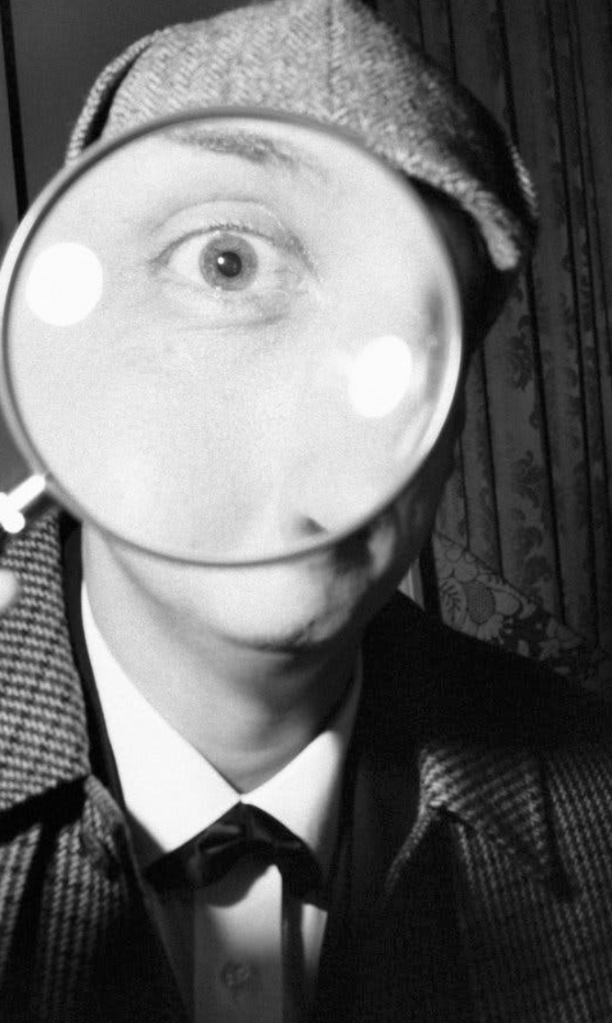
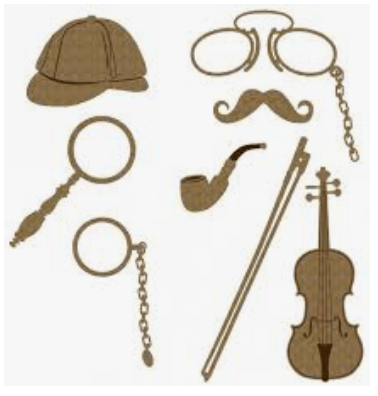
Sherlock Holmes – Looking Glass

The character Sherlock Holmes, as Described by Arthur Conan Doyle was, in his simplest form, a genius. I chose this image because Holmes is well known in stories and movies for his analytical mind and his ability to notice the most minuscule details. I actually find the images of Holmes with a magnifying glass to be satirical because Holmes did not need one to evaluate detail. Other people need the magnifying glass. Other people were not able to walk into a room and immediately being making connections. Holmes had a mind that ran a thousand times faster than everyone else. He did not need accessories to analyze what was in front of him.

The image of a detective using a looking glass is classic however. Even in a childs tv show such as blue clues they need a magnifying glass to see the “clues.” A classical image of a detective normally includes a magnifying glass (or 3) to ensure that details are never missed.

“The Body Snatcher”

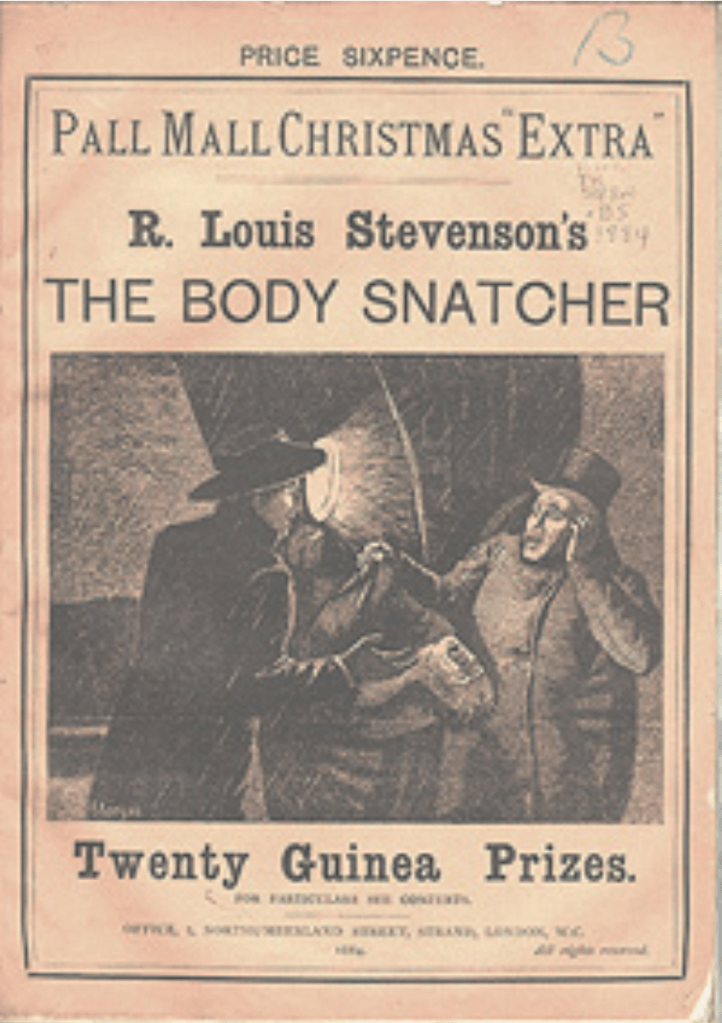
“The Body Snatcher” by Robert Louis Stevenson was based upon the Burke & Hare murders. It focused not on them but on the “medical professionals” that purchased the murdered bodies. This story was creepy and terrifying, imagine that the quiet elderly widow that you greet each morning, could one day be presented to you as a cadaver who overnight has died, despite being perfectly fine the previous day. Stevenson takes the people we are supposed to trust explicitly, our physicians, and turns them into murderers. People were afraid that their graves or the graves of their loved ones might be robbed of the deceased body and now they were afraid that they might be killed simply to fill the supply and demand need for medical professionals to have practice cadavers.

“Don’t ask, don’t tell” was a motto that Fettes lives by. He knew what was occurring, but until he saw the body of a woman he knew, he was able to keep up the facade. These bodies purchased at night added to the horror aspect, bad deeds occur at night. People do not purchase bodies while the sun is out and shining.

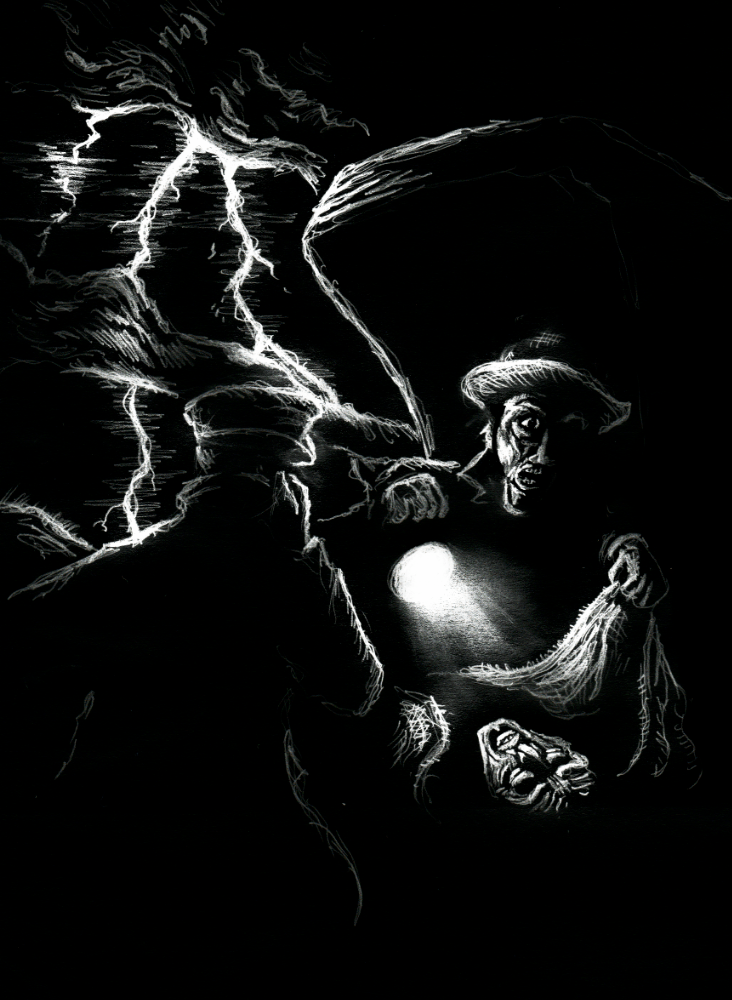
And at the end of this story Stevenson gives his readers the chills by setting a scene of a graveyard at night, black sky, rain pouring down, and the only light coming from a lantern. A lantern that conspicuously goes out as they are trying to remove a deceased body. A body that transforms into another. Is this a mental error due to guilty minds or a paranormal occurrence sprung forth due to hideous acts against the man named Gray.

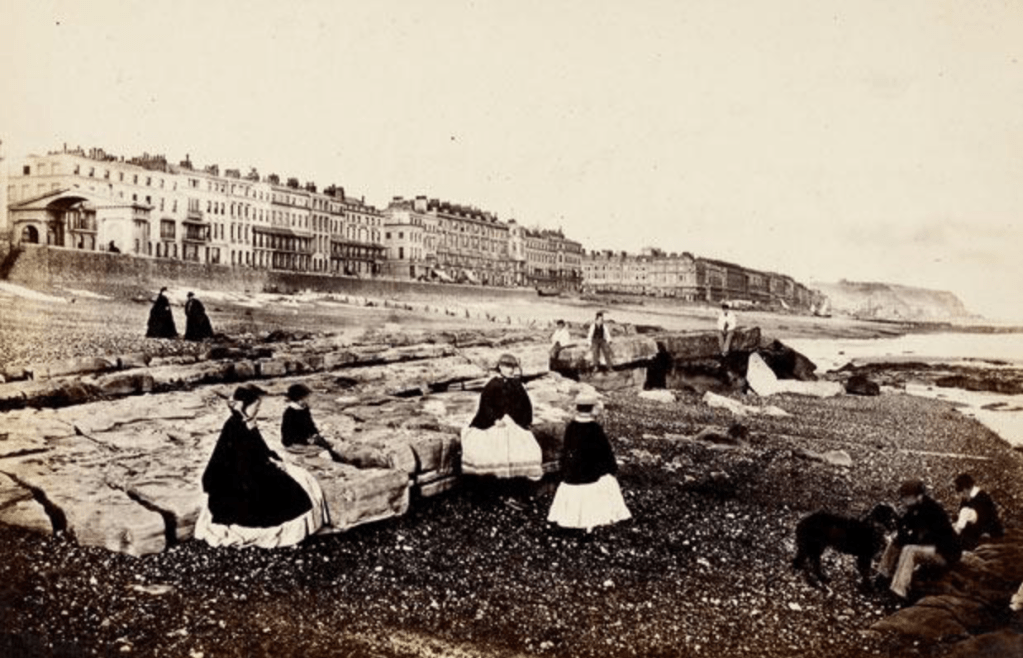
“Hastings from the Beach” – 1864.

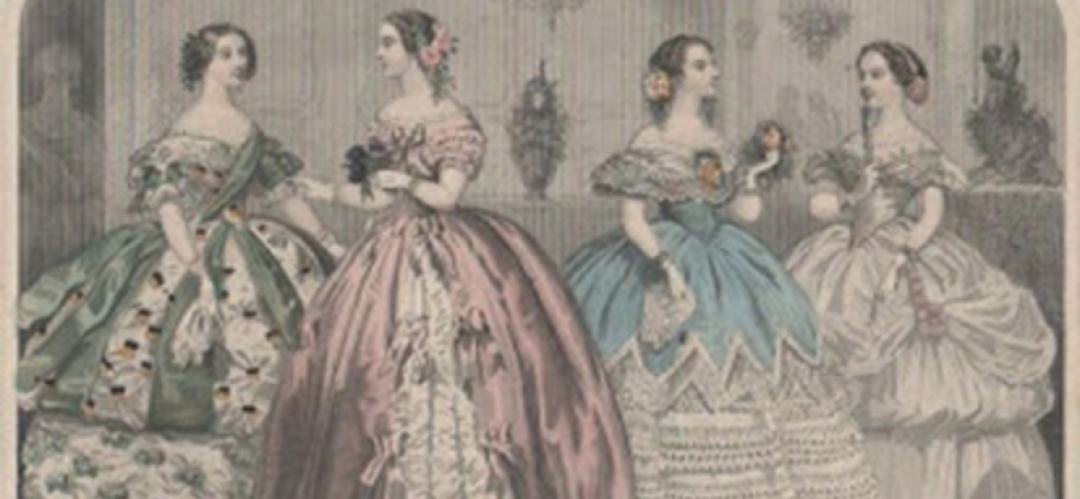
What i first notice in this picture is that everyone is fully dressed and the women appear to have some type of crinoline on to give their skirts more volume. They are very apparently not dressed for swimming. The second thing I notice is that while they are near the sea, there is no vegetation and no birds, I’m assuming this is due to it being fall or winter. Winter in England is harsh and cold, and not conducive to a pleasant swim in the ocean.

Also, I truly can’t imagine these women getting into the water. I feel like it would be inappropriate behavior for a woman of good standing in the Victorian Era. Even if they were wearing (god forbid) less clothing, the result would be wet clothes that would conform to their figure. A figure that is meant to remain hidden and only displayed for the act of procreation. And even then i’m not sure that “proper” men and women were supposed to engage in the act of ogling each others naked bodies.

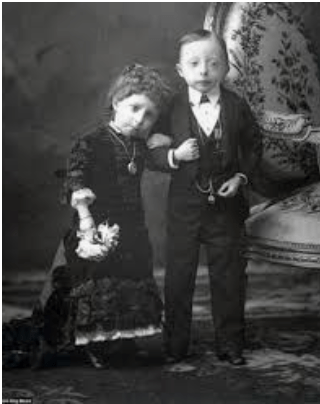
A Victorian “Freak Show”

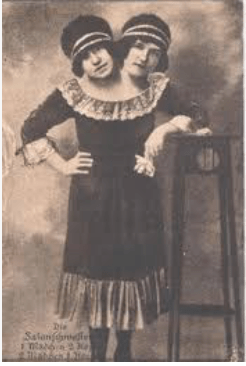
Victorian freak shows made comedy of people who were in actuality just different from the masses. Dwarves, the extremely tall, conjoined twins, bearded women and so on. These people became attractions just because they were different and misunderstood. An understanding of genetics was not yet a “thing” in the Victorian Era. (cough…royals marrying 1st cousins… cough) So people really did not understand why above average tallness or dwarfism existed.

Today these people are still featured in tv shows, such as Little People, Big World or Abby & Brittany, which featured conjoined twins. With the help of medical advancements the majority of the population is aware that not everyone looks the same. And they are aware that some people due to their genetics are very short or tall, can be a conjoined twin or even be a woman with a beard (hello hormones). Understanding however, does not stop people from gawking or pointing or giving them fame by means of a TV show or a job as a professional athlete.

Being different, seriously different, from your peers has the unfortunate effect of separating you. Victorian culture and our culture now puts you in a box labeled “different” and its very hard to get people to see that while your physical appearance is different, mentally you are not dissimilar.

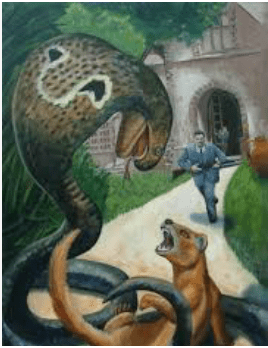
Rikki Tikki Tavi

Rudyard Kipling’s “Rikki Tikki Tavi”, is a fable depicting the spread of the British Empire into India. In this story a British family move into a bungalow with a garden. Within the garden and the house are the natives. The main dialogue takes place between the animals (the natives), they must decide to join the empire or not.

The mongoose, Rikki Tikki Tavi, has joined the empire. The snakes, Nag and Nagaina, are fighting against the empire. The other animals are torn between, you help the empire and the native want to kill you, you help the natives and the empire want to kill you.

The message being sent by the British empire was, join us and we will protect you, or fight against us and we will kill you and your entire family. This is shown when Rikki kills Nag and Nagaina and then destroys their eggs as well, to ensure that their children will not be able to turn against them one day.

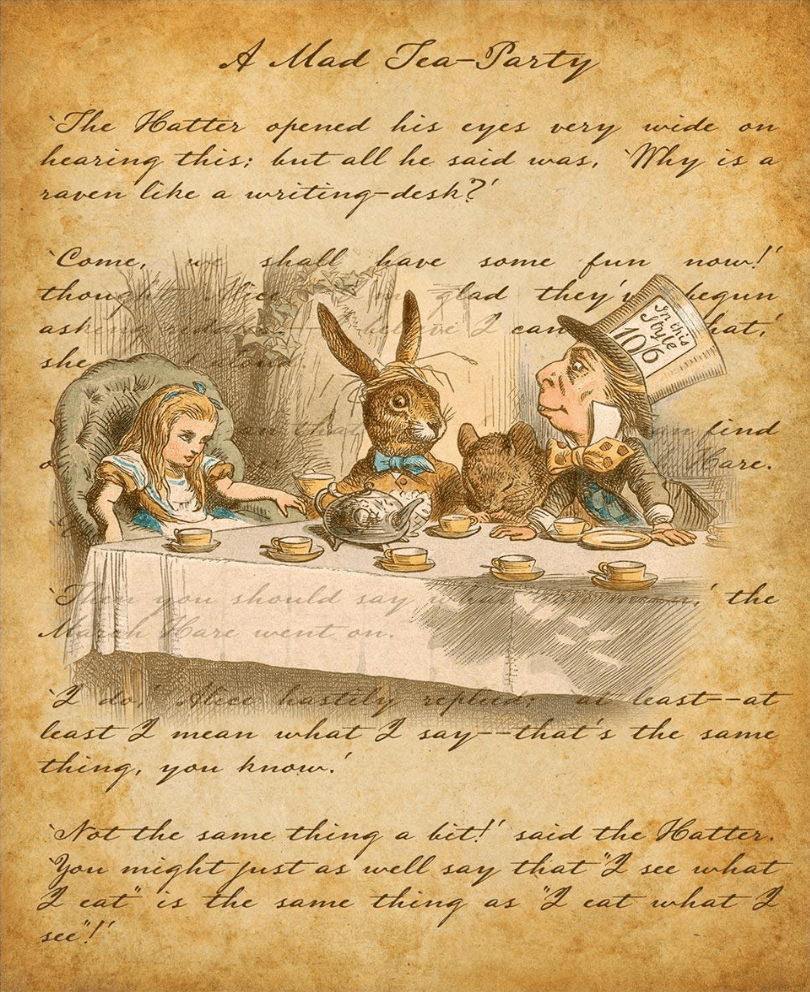
A Mad Tea Party

Before analyzing the story, my overall opinion was that Lewis Carroll was on drugs when he wrote “A Mad Tea Party.” I honestly thought it was nonsensical ramblings from a medicinally altered mind.

However, I now know that, while written in a very whimsical way, Carroll is ultimately discussing politics in this story. His way of conveying a message is different, but people with autism interpret and relay information in a different fashion.

The mad hatter, march hare and door mouse represent the scandals involved in political parties. And Alice is the outsider, she is the independent party in a political race. I thought this was a children’s story but the animals represent very adult themes.

The march hare is sex scandals, the mad hatter is mental instability and the door mouse if alcohol and drug use. And poor Alice, the only one not welcome at the table, is only guilty of being an outsider.

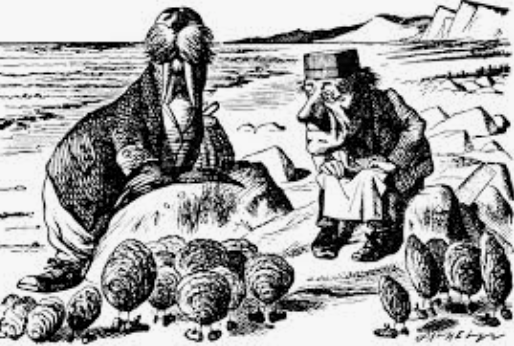
Walrus and the Carpenter

Lewis Carroll’s, “Walrus and the Carpenter” may seem whimsical and nonsensical, but it is, in reality, very dark and ominous. This story, as a whole, is about the horrors of child labor. Carroll is trying to convey a fear and a warning that they way children are being treated and used could lead to the destruction of an entire generation.

The walrus in this story is upper class, a politician or a factory owner, and the carpenter is working class. The overall message is being conveyed to the people, the masses. The upper class do not need to fear for their children, but the working class and the poor are the ones who have children dying while performing jobs that no child should be performing. Coal mining, chimney sweeping, factory working, most children die trying to bring in money.

Goblin Market

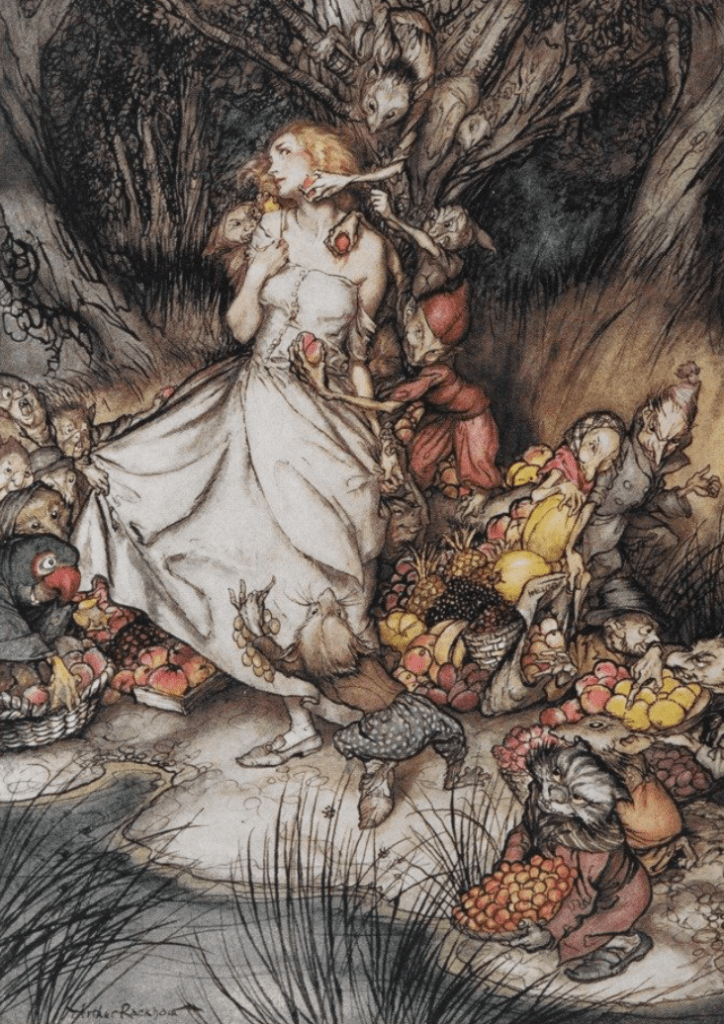
Christina Rossetti’s Goblin Market focuses on two different types of people, the predators and the prey. In this poem the predators take away what society teaches us is our only value. In this victorian era for women this was a lady’s chastity (madonna or whore)

Today this poem could be applied to many areas of life. Lets look at this from the perspective of a teenage girl who lives in poverty (in the projects for example). What is this girls value? What does she have to offer? She has no money, no college degree, no career, no family. Yet society tells her that she can do it all. And she can do it all alone…..

The Goblin in this story is a man who is offering her a way to forget about her troubles. Use him he says to make yourself feel better. Your a strong woman he says and you can do whatever. You thought that he wanted you, but he really only wanted one thing. Now he’s gone. You’ve eaten the fruit and he’s no longer interested. Where is this girls value now? She’s given away the only thing she had to offer and has nothing to show for it and nothing left to give.

To the Victorians and to modern day Americans people are placed into boxes. Neat little boxes to describe every person. The girl in this story went from a madonna box and is now in a box labeled whore. The same is true for Victorian women/girls. This is a way that society controlled young women. By telling them that one they’ve been used no one will want them, no husband will have them, they now have no future prospects. Because their only worth was their virtue. A very harsh society we are indeed.

Victorian Domestic Servitude

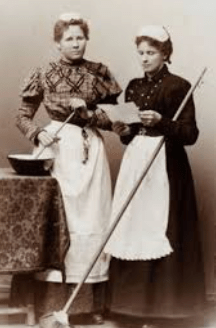
Having lived in a modern age the thought of domestic servitude, as was seen in the Victorian age, gives me the chills. In a horror movie way, not a good way. A governess for example is thought to have a good position. Teach and care for the children. Should be simple enough, right?….. Not exactly, they often made little to no money at all, were expected to have an extensive educated background and be proficient in more than one language. They would also suffer the affections of the lord of the house, his grown male children and in response, disdain from the wife. 

I think that I would not have enjoyed this job at all. While we as a society are very Victorian at least there are now better equality laws and working laws with HR departments whose sole job is to ensure things such as blatant sexual assault does not occur. (That’s not say that it does not still occur today)