The Mary Celeste (Victorian Olympic Assignment)

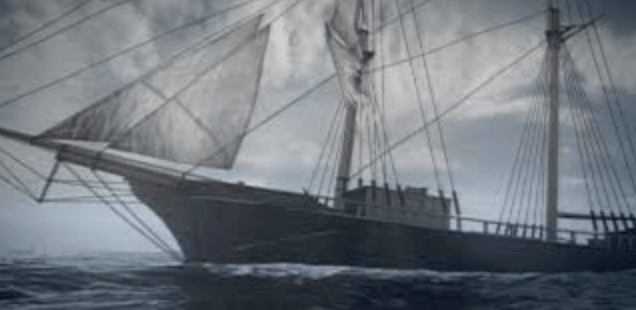
FOUND BY: CAPT. DAVID MOREHOUSE OF THE BRITISH BRIG DEI GRATIA
400 MILES EAST OF THE AZORES ON DECEMBER 5, 1872

THE MARY CELESTE LEFT NEW YORK ON NOVEMEBER, 7 1872. 
THE DEI GRATIA LEFT THE SAME PORT 8 DAYS AFTER THE MARY CELESTE ON NOVEMBER 15TH

WHAT WAS FOUND ON BOARD?

  • No sign of the 7 crew members 
  • No sign of Capt. Benjamin Spooner Briggs, his wife, Sarah, and the couple’s 2-year-old daughter, Sophia
  • The last ships log entry was recorded at 5am on November 25th indicating that the ship was heading for the island of St. Mary in the Azores 
  • Chronometer and sextant were absent 
  • Belongings still in rooms 
  • Charts tossed about 
  • The only lifeboat was missing
  • One of its two pumps had been disassembled
  • 3.5 feet of water was on the bottom of the ship 
  • The cargo of 1,701 barrels of industrial alcohol was largely intact (Only 9 were found empty)
  • A 6 months supply of food 

What Happened

  • One of the ships pumps stopped working – this could be due to a history of the ship hauling coal and old debris from the coal blocking the pump. 
  • Inclement weather, something such as a sea quake, could have shocked the ship and scared the crew and CPT enough that he ordered them to abandon ship with the thought that they would arrive at the island of St. Maria. There have been recorded reports of crew having to abandon ship in this area due to sea quakes. 
  • Explosion due to alcohol leakage and subsequent vapors in the hold. The 9 barrels that were found empty were made of a more porous red oak (rather than white oak like the others) which could have slowly leaked alcohol causing a buildup of alcohol vapors. The barrels tied with steel band would then rub against each other causing a spark and then an explosion of fumes and fire.  An immediate evacuation would have been ordered. However, no burn marks were recorded. 
  • The CPT fearing for the safety of his crew and families lives ordered them to abandon ship very hastily (since none of their belongings were taken). Unfortunately the inclement weather capsized the lifeboat and they all drowned in the rough seas. 

REFERENCES

Robert and Elizabeth Browning

Elizabeth and Robert Browning seem to have 2 very different concepts of love. Elizabeth’s poem, Sonnet 43, shows you an all-consuming truly devotional love toward another person. This person makes your day brighter and gives you butterfly’s in your stomach at the mere thought of them. 

Robert Browning’s poem, Porphyria’s Lover, shows you a darker side a love. This love is unhealthy, tempered by jealousy and a need to control another person’s thought. This type of love is dangerous and as shown in the poem can end tragically. 

I think Elizabeth’s poem is fantasy, or drug induced euphoria, because while you can love another person, it should never consume who YOU are as a person. Robert’s poem, while completely dark is more in line with human nature. People are imperfect, they are passionate and calm and jealous and understanding. People are complex and sometimes that complexity leads to tragedy.

Victorian Prostitution

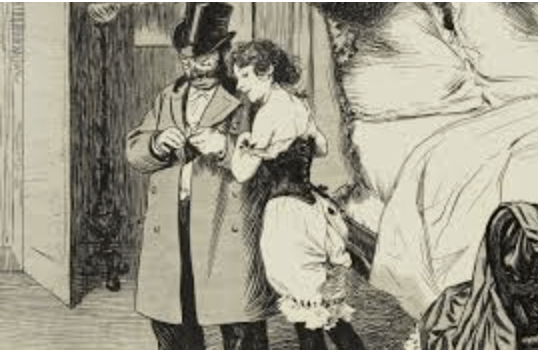
Victorian prostitution is a vicious cycle that ultimately in this era lead to death. Medical treatment for venereal disease was almost non-existent and items such as condoms were new and rarely used. Many women turned to prostitution out of need, for example, a working-class girl would make barely enough money to feed herself, she had no husband to care for her and needed a way to make money. She would turn to prostitution because it was easy and lucrative. She likely had the intention of only being “in the business” for a couple years to gain enough income to begin a new life. However, her new job as a prostitute would generally lead to a disease such as syphilis which had no cure, would spread through her job and would lead to her untimely death. Or she would become the victim of another person trying to rid the world this “fallen woman”. 

“The Lady of Shalott”

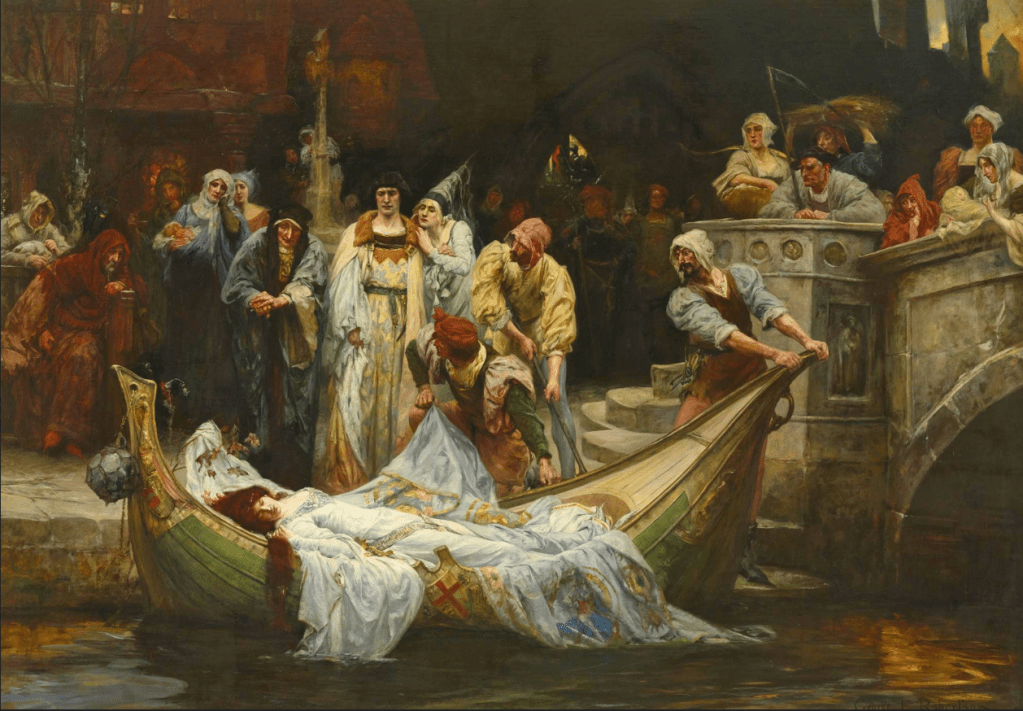
George Edward Robertson (British, 1864), “The Lady Of Shalott”, 1900

While looking through different portrayals of “The Lady of Shalott” I found the above painting. It is a bit different than most of the other paintings I saw, but I feel the emotion portrayed is the same. In this painting the Lady has reached Camelot and she is now dead due to her curse. She was separated from her artistic perspective and could no longer live. Consistent with the poem, she still wears white and her red hair is common in many paintings. Her woven shroud lays in the water and appears to be light blue in color with a discernible image of a horse and knight (Lancelot) woven into the pattern. There is a gray lantern to light her way and hanging over her are what appear to be dead leaves or possibly dead flowers, lilies perhaps, as told in the poem. While there are no knights with their distinguishable armor, there are plenty of nobles that appear shocked at her arrival and are pulling her boat over. They are wearing bright colors that show life and vitality. The overall expression and attitude of the crowd is truly one that says we are finally noticing you. Unfortunately, death is generally how artists attain notoriety. 

Working Conditions in Victorian England

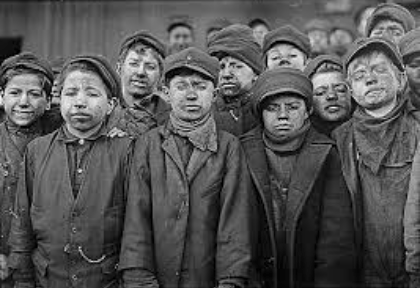
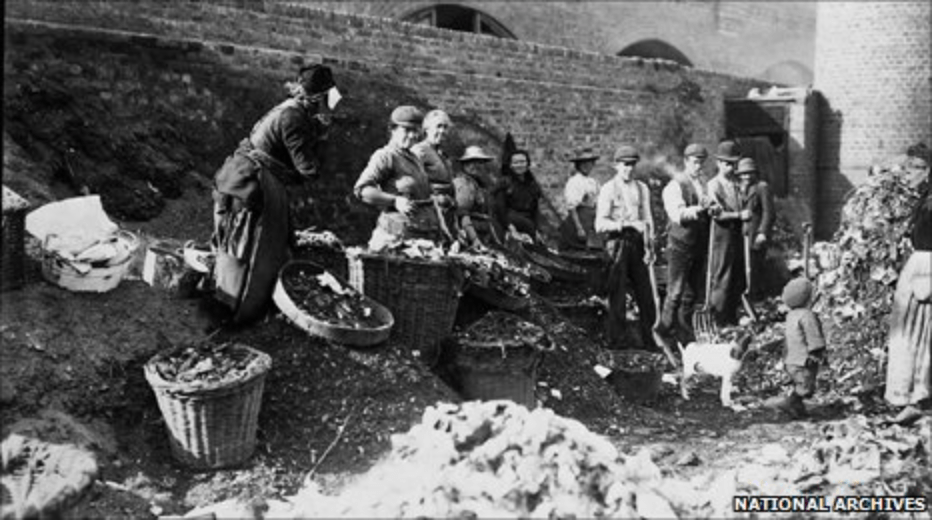
The working conditions for the Victorians were horrendous, unsafe, dirty and many many many more adjectives could describe it. They used children for things such as wading through the toxic Thames river mud to find sellable items or even maiming children to garner more sympathy and money while begging on the street. Both of those things would be considered illegal in today’s society. Unfortunately, endangering children for monetary benefit still occurs today, however it tends to be a bit more subtle, such as lying about mental deficits to gain government funding. 

Victorian workhouses are definitely different from state funded programs to give work in today’s society. My mind goes immediately to “temp” job agencies, where they contract you out for minimum wage. The wages in workhouses however were practically non-existent, they only fed you enough to stave off starvation and they might clothe you and allow you to occasionally bathe. The conditions were atrocious. The only real positive I saw come out of workhouses was the beginning of state funded medical care. This is something that has persisted and grown exponentially in America. 

The Working Classes and The Poor Imagery

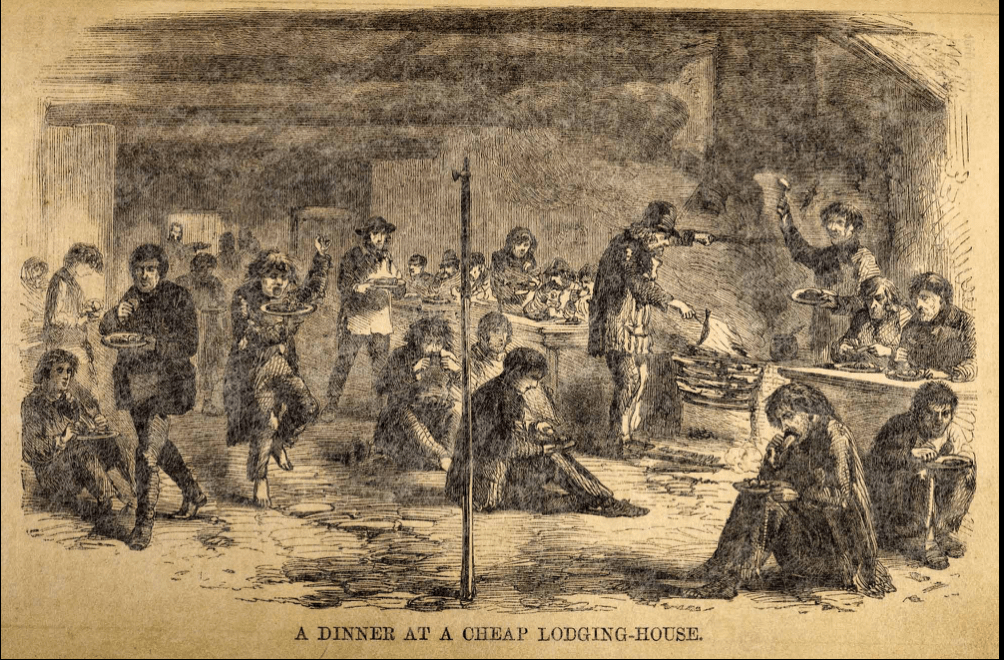
Imagery can be a powerful force. Words may give us a description, but an image can deliver a direct collaboration of whatever the text discusses. Imagery draws the eye and garners interest. While reading The Working Classes and The Poor, I noticed the image of Dinner at a cheap lodging house, 1859. This image is dreary and sad, with overcast skies and an overall feeling of dread. It is the desolate and dark atmosphere that helps to illuminate on how impoverished these people are. There are no happy faces shown, they all appear to be resigned and run down. The people in this image are stuck in a system that demands hard work and long days but only pays the bare minimum. They were fed only enough to keep from starvation and only occasionally bathed. The pay offered was also never enough to allow the paupers to break free from this situation. To me this image portrays the vicious cycle of keeping the poor, poor. 

Who Were the Victorians?

Looking at a brief overview of the Victorians I can immediately summarize that this time frame is complex. The Victorians, as a whole, cannot be defined by one feature and they are both similar and dissimilar to today’s society. One of the major similarities I noticed was their emphasis on politics and having a representative government. Some of the most notable political movements; socialism, liberalism and feminism, are still prevalent today and are widely discussed and analyzed. The American government is greatly influenced by the opinion of “the people” and the same can be said for The Victorians. 

One difference I noticed was a woman’s role in everyday life. Options for women were limited in the Victorian Era when compared to the opportunities presented today. However, during this time period, you can see women’s roles in society expanding which of course is a movement in the correct direction. 

Two major advancements I saw were in the medical field with Joseph Lister’s aseptic technique and the use of anesthetics. Both practices are now widely utilized worldwide. The aseptic technique alone has saved countless lives by preventing infection during medical treatment. 

Rules For Social Media

One rule for social media etiquette that I see broken far too often is, “don’t write private messages on wall posts.” I admit that I am on Facebook daily, even multiple times a day, it’s an unfortunate obsessive habit of mine to sit there and mindlessly scroll through posts. However, I can’t help but wonder why some people feel the need to air their dirty laundry to everyone. I personally was taught that its best to keep, for example, your family problems within your family. 

Not too long ago, while perusing Facebook, I saw a woman asking for advice on a specific group page. She wanted to know what to do about her “baby daddy” who she discovered was married. She even posted screen shots of private text messages between herself and this man. All I could think while reading through the responding comments, which were not helpful and some were even downright nasty, was why would you post this to a group of women who do not know you? Why wouldn’t you ask your own friends or family in private? I can’t help but wonder what made this woman “air her dirty laundry” to complete strangers, because I was taught that this is a huge social faux pau.

About This Blog/Class

This blog is focused on Humanities 101, The Victorians. It will show responses to daily/ weekly readings that cover social and cultural norms for the victorians and how they relate to the current day and age. I expect to form an understanding of the Victorians and how we as a culture have changed or even how we have not changed from this century. I am hopeful that this information will help me to understand, what we consider to be normal social customs, and how they in fact were stemmed from The Victorians. I am especially interested in how victorians firmly established social classes and “boxes” for certain groups of people.